Anne Teresa De Keersmaeker
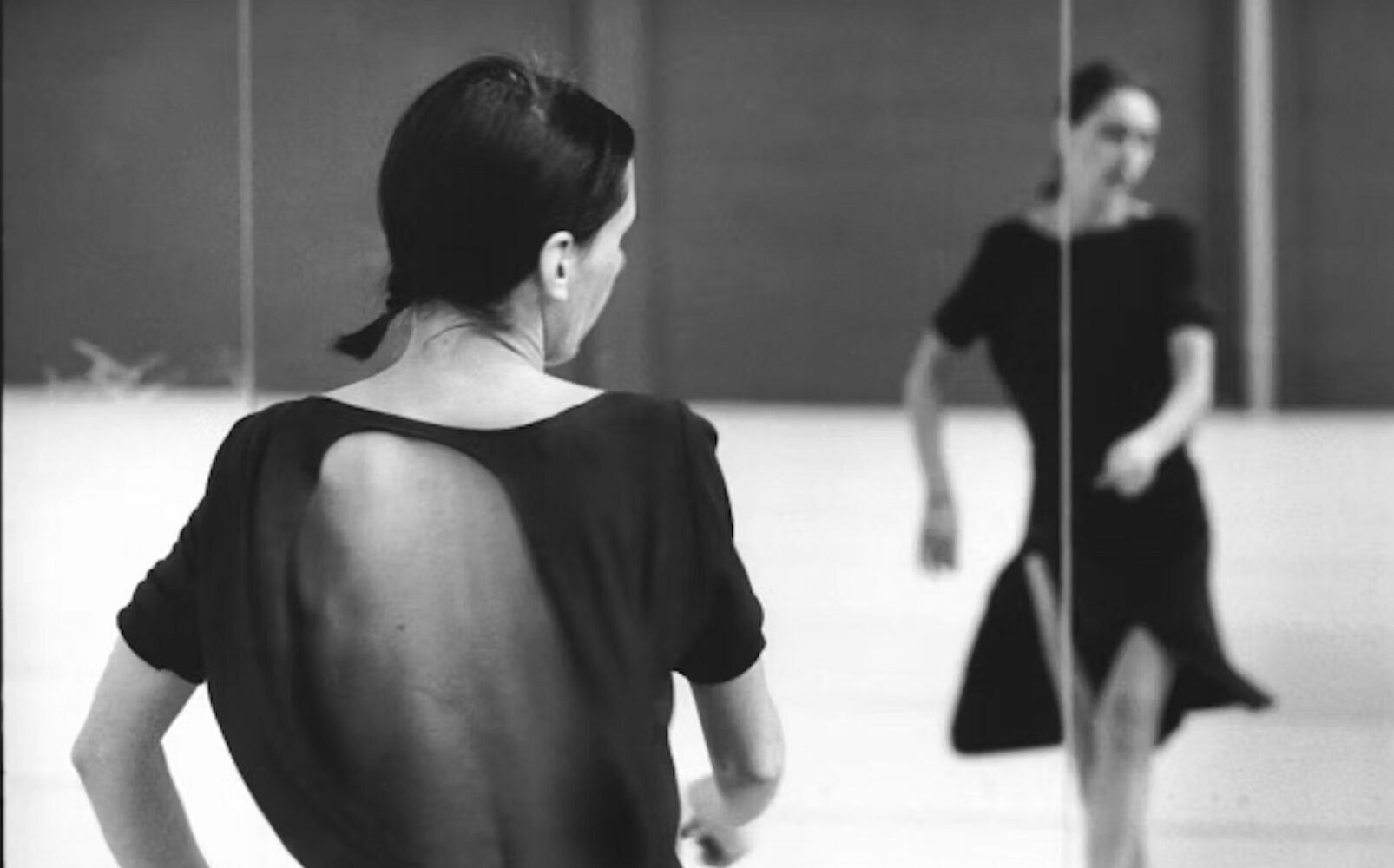
Born in Mechelen, Belgium, in 1960, Anne Teresa De Keersmaeker is one of the most influential figures in contemporary dance, internationally acclaimed for a choreographic practice grounded in structure, musical composition, and geometric abstraction.
After studying at Maurice Béjart’s Mudra School in Brussels and at NYU Tisch School of the Arts in New York, she emerged in the early 1980s with Fase, Four Movements to the Music of Steve Reich (1982), a seminal work that established her precise dialogue with minimalist music. In 1983, she founded the company Rosas and created Rosas danst Rosas, a landmark piece articulating her sustained exploration of repetition, accumulation, and the translation of musical structures into movement.
Across four decades, De Keersmaeker has developed a rigorous body of work that draws on composers ranging from Bach to Bartók, Steve Reich and contemporary music, transforming compositional principles into spatial and corporeal architectures. Geometry lies at the core of her research, not as visual motif but as an operative system shaping time, space, and collective presence.
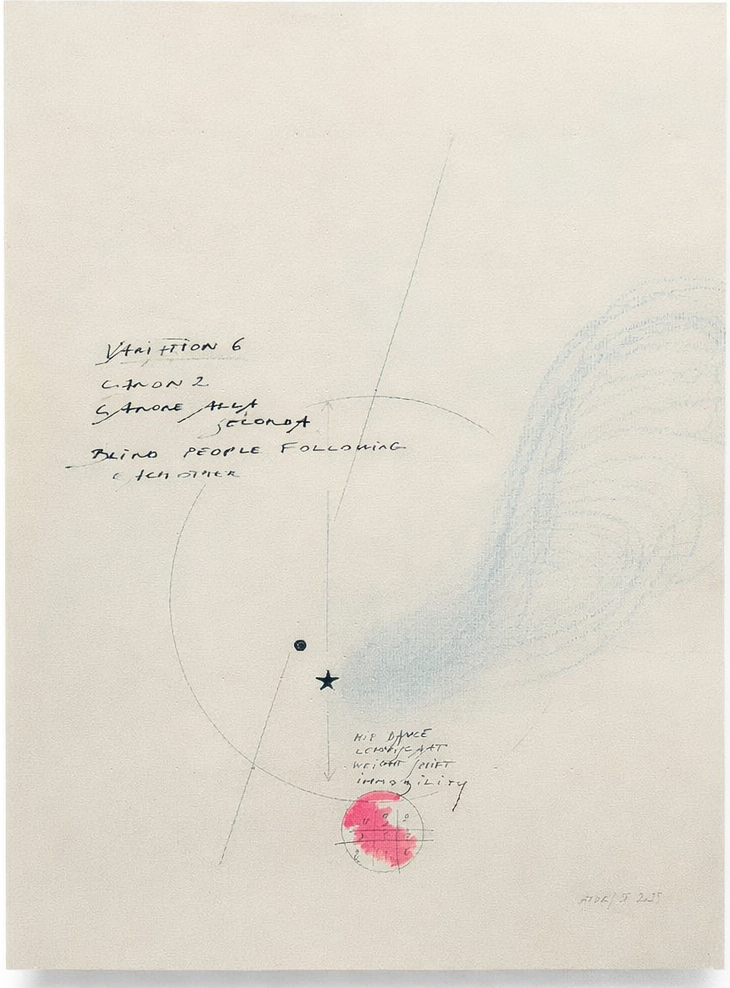
Since 2015, she has expanded her practice into the museum space, notably with Work/Travail/Arbeid, first presented at WIELS and later at Tate Modern and MoMA, foregrounding duration, labor, and the exhibition format as choreographic material. Parallel to her stage works, De Keersmaeker has developed a distinct visual oeuvre comprising drawings and paintings. Conceived as scores, traces, or geometric condensations of movement, these works on paper and canvas translate the horizontal logic of the dance floor into chromatic lines and spatial constructions. Drawing, for her, is an immediate bodily form of thinking in which gesture and structure converge, occupying a position that is both processual and autonomous within her practice.
In 1995, she founded P.A.R.T.S. in Brussels, shaping generations of dancers and choreographers. Her work has been presented at major international institutions and festivals, including the Louvre, Fondation Beyeler, Neue Nationalgalerie, and continues to redefine the relationship between choreography, music, and abstraction.