Gego
Born in Hamburg in 1912, Gego (Gertrud Goldschmidt) developed a body of work that fundamentally redefined the relationship between drawing, space, and perception. Trained as an architect and engineer in Stuttgart, she brought a rigorous understanding of structure and spatial logic to her artistic practice. After emigrating to Venezuela in 1939, she gradually moved away from architecture toward an expanded conception of drawing that unfolded directly into space.
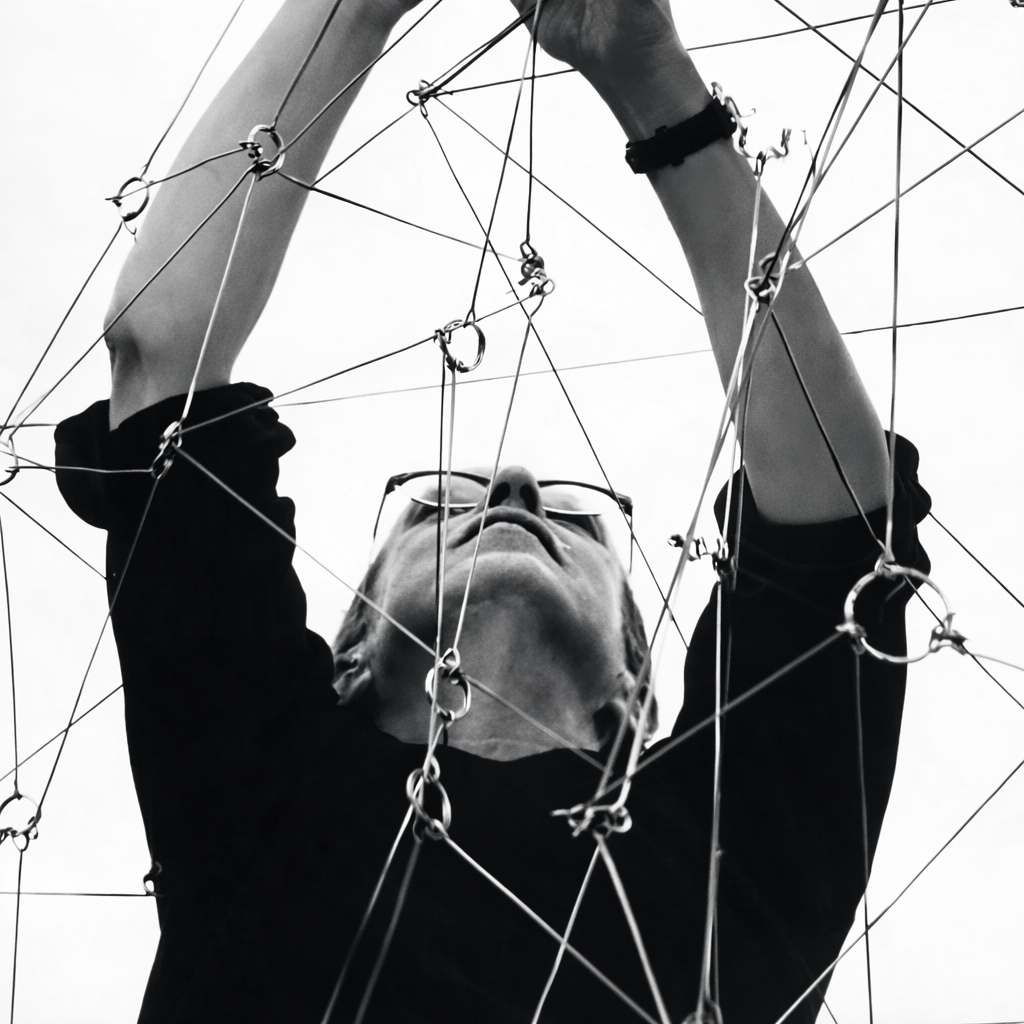
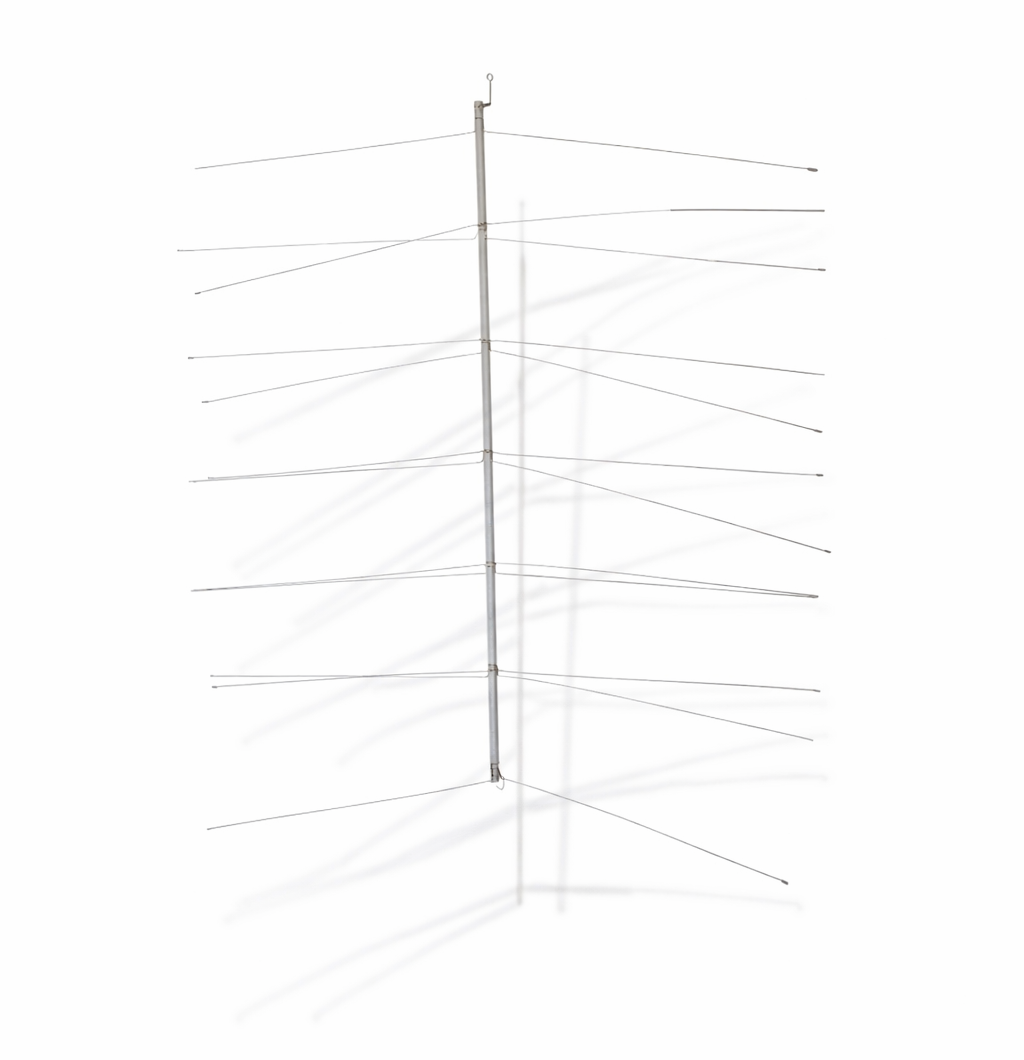
Gego’s work resists conventional categorization. Situated between drawing and sculpture, it functions as a network of relations rather than as a closed form. Using lines, wires, and modular elements, she articulated spatial configurations that remain open and responsive to the viewer’s movement. Her works are not conceived for frontal viewing, but for physical involvement, unfolding through proximity, circulation, and duration.
This approach finds a decisive expression in her dibujos sin papel, in which drawing is released from the page and extended into the surrounding environment. Line becomes a means of structuring space, generating rhythm, density, and depth without enclosing form. As the viewer moves through and around these works, spatial experience shifts continuously, shaped by changing viewpoints and bodily orientation.
Gego’s practice aligns closely with phenomenological approaches to art that foreground embodied experience. Her work advances a mode of abstraction grounded in presence, movement, and spatial awareness, dissolving boundaries between disciplines and placing lived experience at the center of formal exploration.