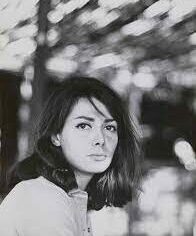
Laura Grisi
Born in Rhodes in 1939 and trained between Rome and the École des Beaux-Arts in Paris, Laura Grisi emerged in the Rome of the mid-1960s, among its artists, writers and film-makers. Her Variable Paintings, shown at the Venice Biennale in 1966, were built from sliding panels the viewer could move: the picture had no single state. That same year she became one of the first artists in Italy to work with neon. From 1973 she showed regularly with Leo Castelli in New York; she died in Rome in 2017.
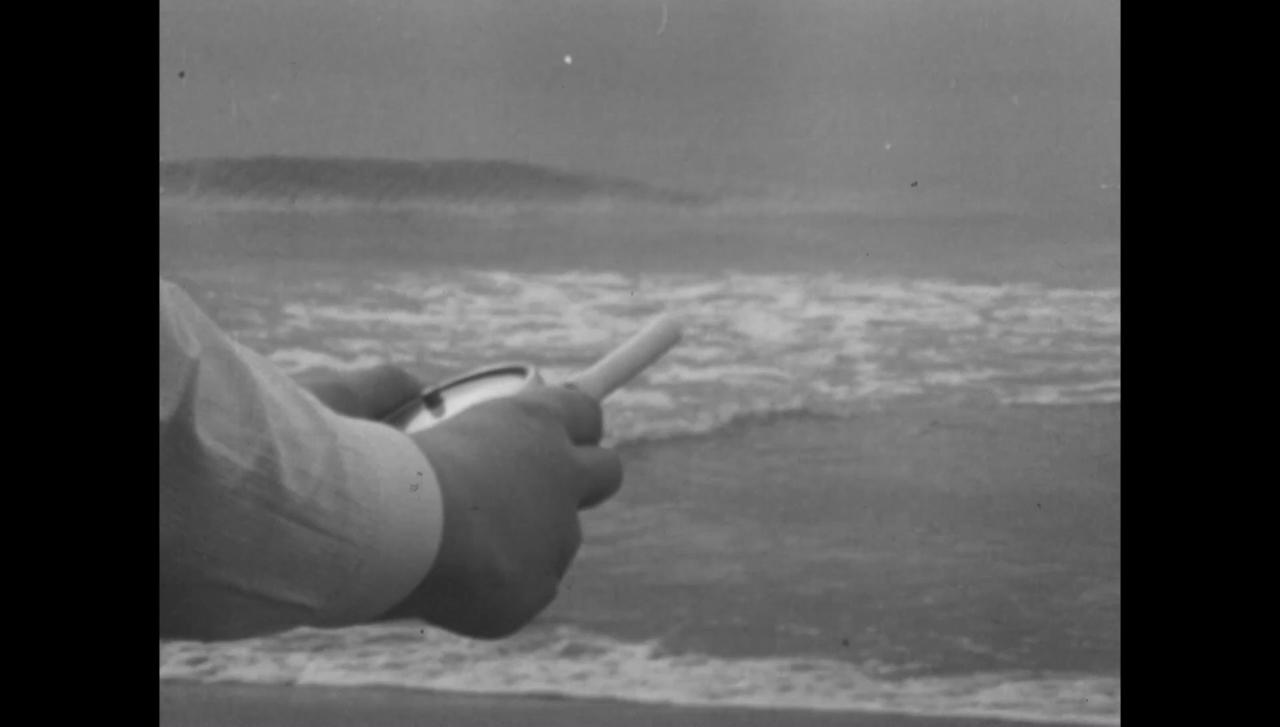
In 1968 she turned to what cannot be held — wind, fog, rain. Travelling with her husband, the documentary film-maker Folco Quilici, she had the wind filmed in 16 mm as it moved over sand, sea and fields, obstructed by the trees of a forest or channelled between the walls of a city, measuring its speed with an anemometer as the camera ran. That same year, at the Galleria La Tartaruga in Rome, she made the wind itself: hidden fans drove a forty-knot gale through a space visitors walked into. The film shows the wind measured; the installation makes it blow.
Panoptès holds Wind Speed 40 Knots (1968), the 16 mm film, projected directly onto the wall. The camera follows the effects of something it cannot itself capture: a dial, a hand, hair displaced by the air, the surface of water, the needle of the anemometer rising. The film does not represent wind so much as record the act of attending to it. What has no shape can still be given to perception, provided someone builds the conditions for it.
This enquiry continues elsewhere in the collection. Germaine Kruip, who encountered Grisi’s work only after her death, has acknowledged her as an important point of reference. In The Illuminated Wind, Udone-shima (2023), also held by Panoptès, the light of a room rises and falls with the wind measured, in real time, on an uninhabited island off Japan. Fifty-five years apart, the two works make perceptible what cannot itself be seen: one through the recorded effects of wind, the other by translating its changing force into light.