Jef Verheyen
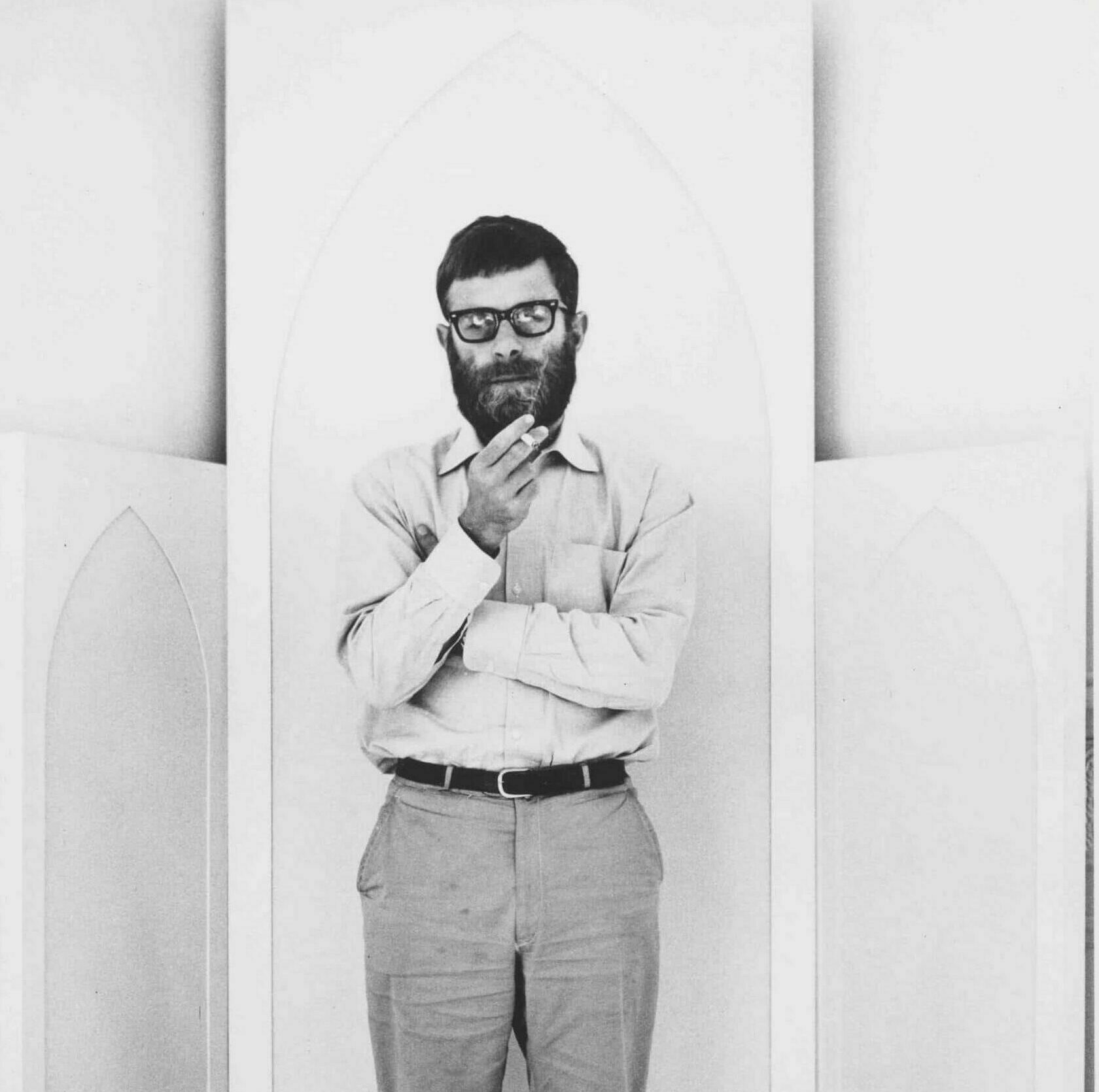
Born in 1932 in Itegem, Belgium, and raised in Nijlen, in the Campine region, Jef Verheyen trained at the Royal Academy of Fine Arts in Antwerp between 1946 and 1952. He began painting monochromes in 1956 and articulated his ideas in the 1958 manifesto Essentialism. For Verheyen, painting was not a means of depicting the visible, but of creating the conditions through which it could be perceived. Drawing on the techniques of the Flemish Primitives, he applied thin layers of colour beneath a matte varnish to create chromatic fields on which the eye cannot settle. He described these works as panchromatic, capable of holding all colours at once.
From the late 1950s, Verheyen became closely connected to the international postwar avant-garde. In Milan in 1957, he met Lucio Fontana, with whom he maintained a close friendship until Fontana’s death in 1968. Through these exchanges, he entered into dialogue with the international network of artists associated with the ZERO movement, while developing his own distinctive investigation of colour, light and perception.
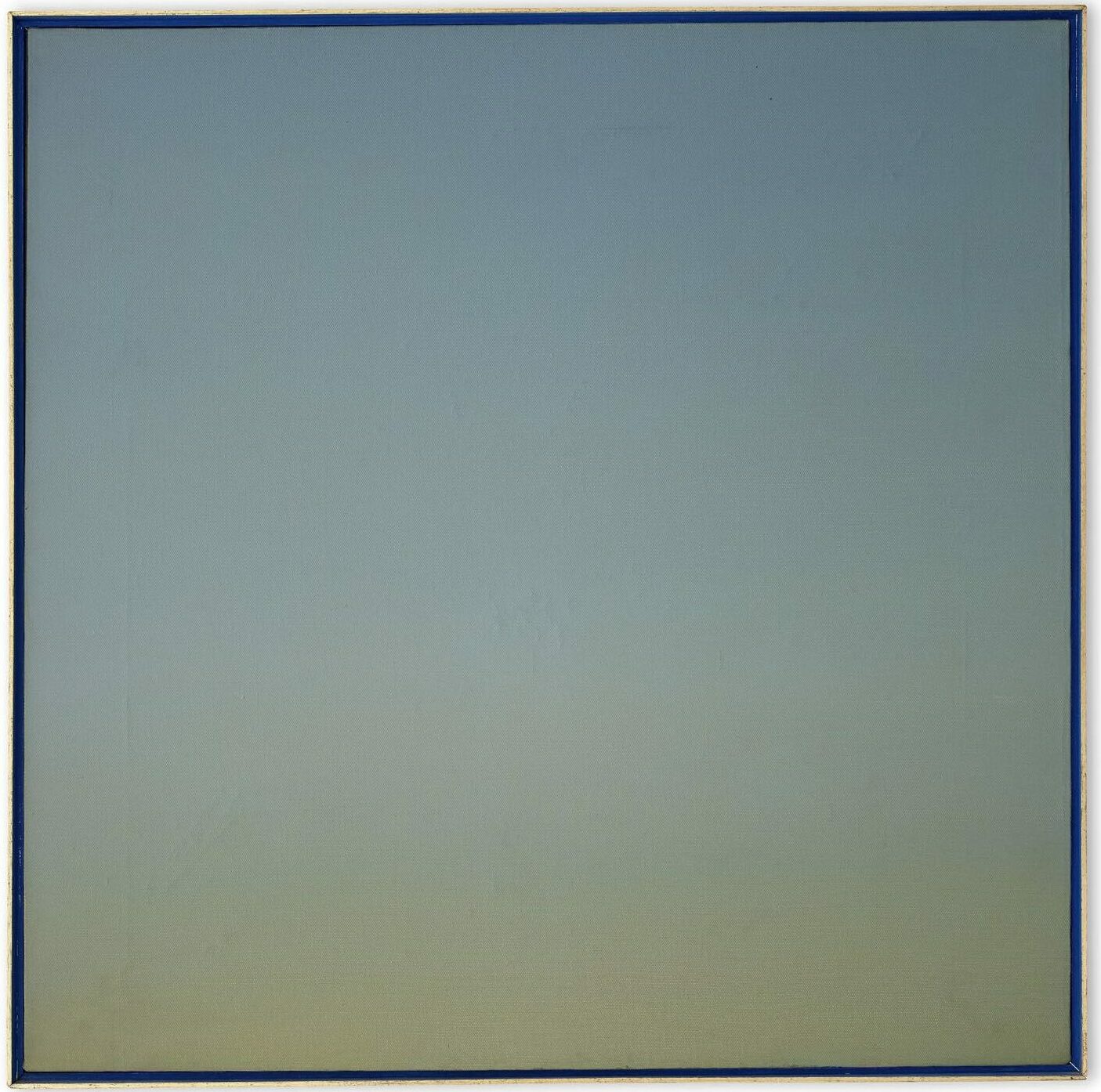
Painted in 1964, Bevel, Vlaams landschap takes its title from a village near Nijlen whose distinctive light Verheyen sought to capture, particularly its elusive quality before daybreak. Through superimposed layers of soft blue, pale green and yellow, he transformed the Flemish landscape into a vibrant atmospheric field, allowing light to become both the subject and the material of the painting. The work was exhibited in Kreislauf der Farben at the Kunstmuseum Düsseldorf in 1973 and reproduced in the accompanying catalogue. It was also included in the catalogue of the 2024 retrospective Jef Verheyen: Window on Infinity at the KMSKA in Antwerp.
Verheyen’s work was recognised early within the European postwar avant-garde. His 1966 exhibition at the Palais des Beaux-Arts in Brussels received the AICA award for best exhibition, and in 1970 he was selected for the Belgian Pavilion at the Venice Biennale. A major retrospective at the Palais des Beaux-Arts in 1979 later travelled to the Musée Rath in Geneva. The 2024 exhibition in Antwerp renewed attention to the singularity of his sustained exploration of colour, light and perception.