John McCracken
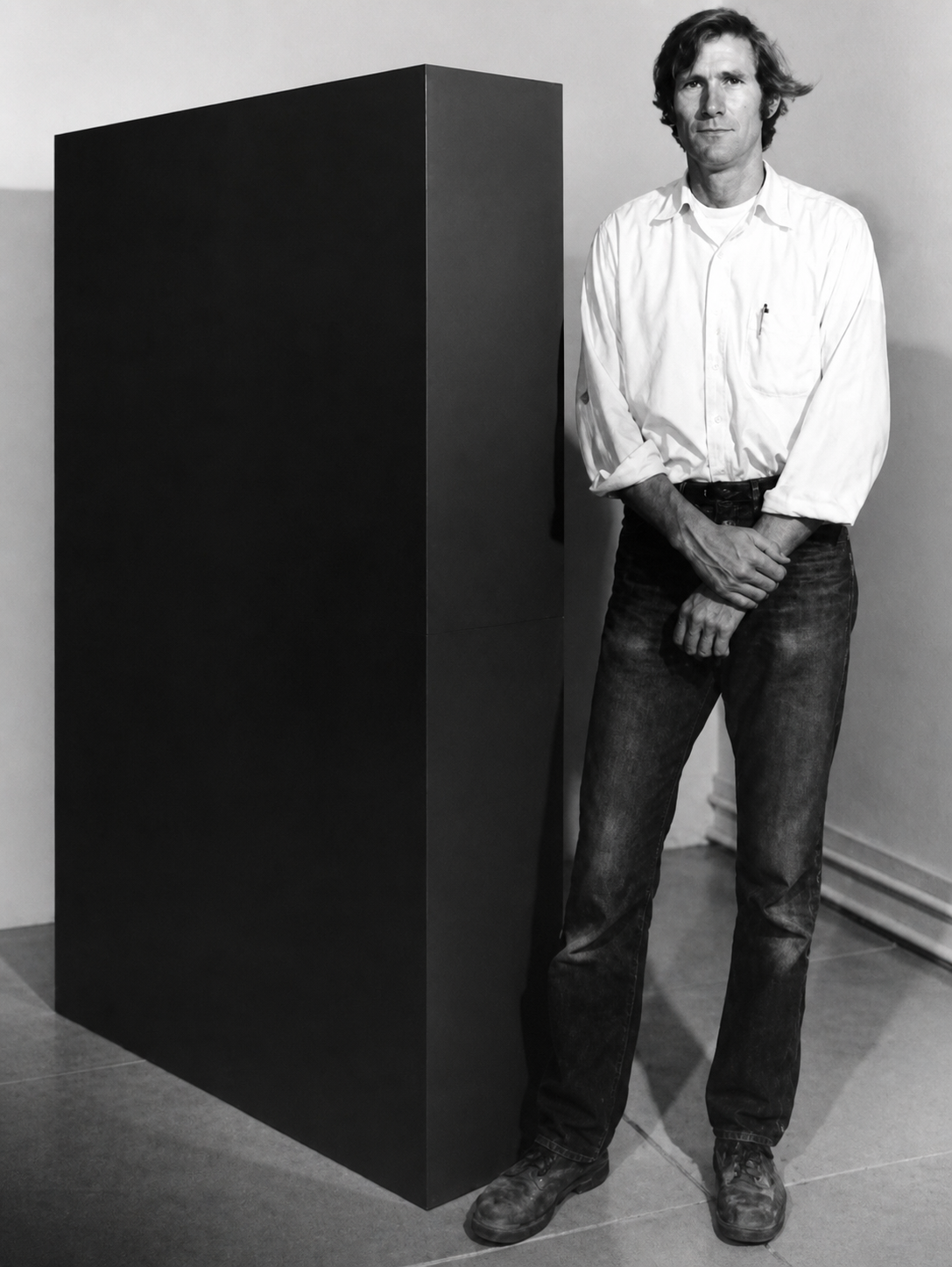
Born in 1934 in Berkeley, California, John McCracken was a central figure of postwar American art whose work occupies a singular position between minimalism and the Light and Space movement. Trained initially as a painter at the California College of Arts and Crafts in Oakland, he progressively developed a body of work that challenges the traditional boundaries between painting and sculpture, pursuing a practice defined by formal economy, material precision, and an acute sensitivity to perception.
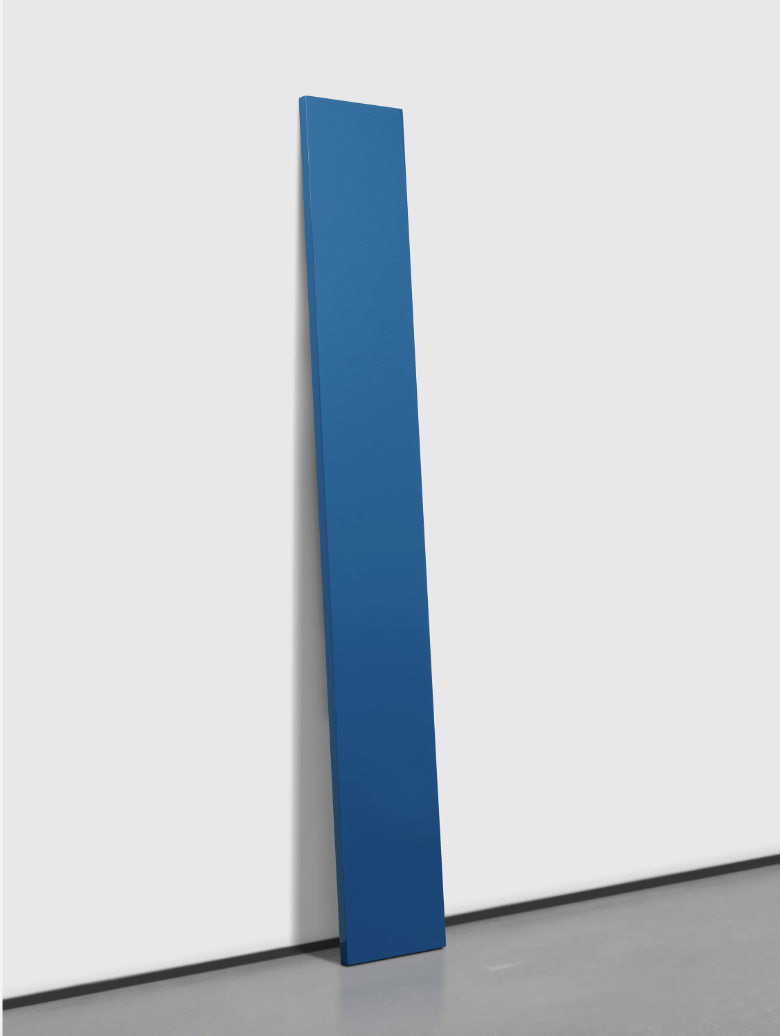
McCracken’s work is grounded in a phenomenological approach in which the object is activated through the viewer’s bodily presence and spatial experience. His iconic “planks,” introduced in the mid-1960s, exemplify this condition: leaning at a slight angle against the wall, they occupy an ambiguous position between the vertical plane of painting and the horizontal logic of sculpture. Neither fully one nor the other, they establish a subtle tension between wall, floor, and viewer, inviting a heightened awareness of one’s own physical relation to the work. They function as thresholds between perceptual realms (the physical and the imagined), while remaining radically simple in form.
Untitled (1976) exemplifies this vocabulary: its elongated proportions and monochrome surface emphasize verticality and restraint, while its polished finish captures and reflects ambient light, subtly dissolving the object into its surroundings. This reflective quality, achieved through a meticulous process of layering and polishing pigmented resin, is central to McCracken’s practice, allowing the work to oscillate between material presence and optical immateriality.
Color, in McCracken’s work, is not applied but constructed: it operates as a structural element through which form is articulated and perceived. The apparent simplicity of his sculptures conceals a rigorous making process and a sustained engagement with the conditions of perception, where surface, light, and space converge. Through an economy of means and a precise attention to placement, his works generate an experience that is at once physical, optical, and contemplative.