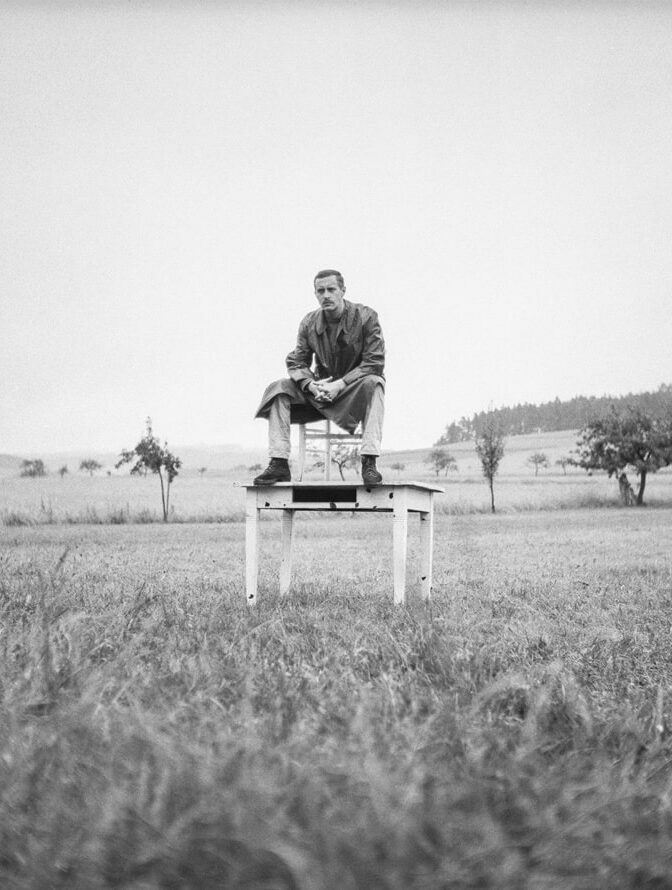
Franz Erhard Walther
Born in 1939 in Fulda, Germany, Franz Erhard Walther is a key figure in postwar art whose work redefined sculpture as a field of action, perception, and temporal experience.
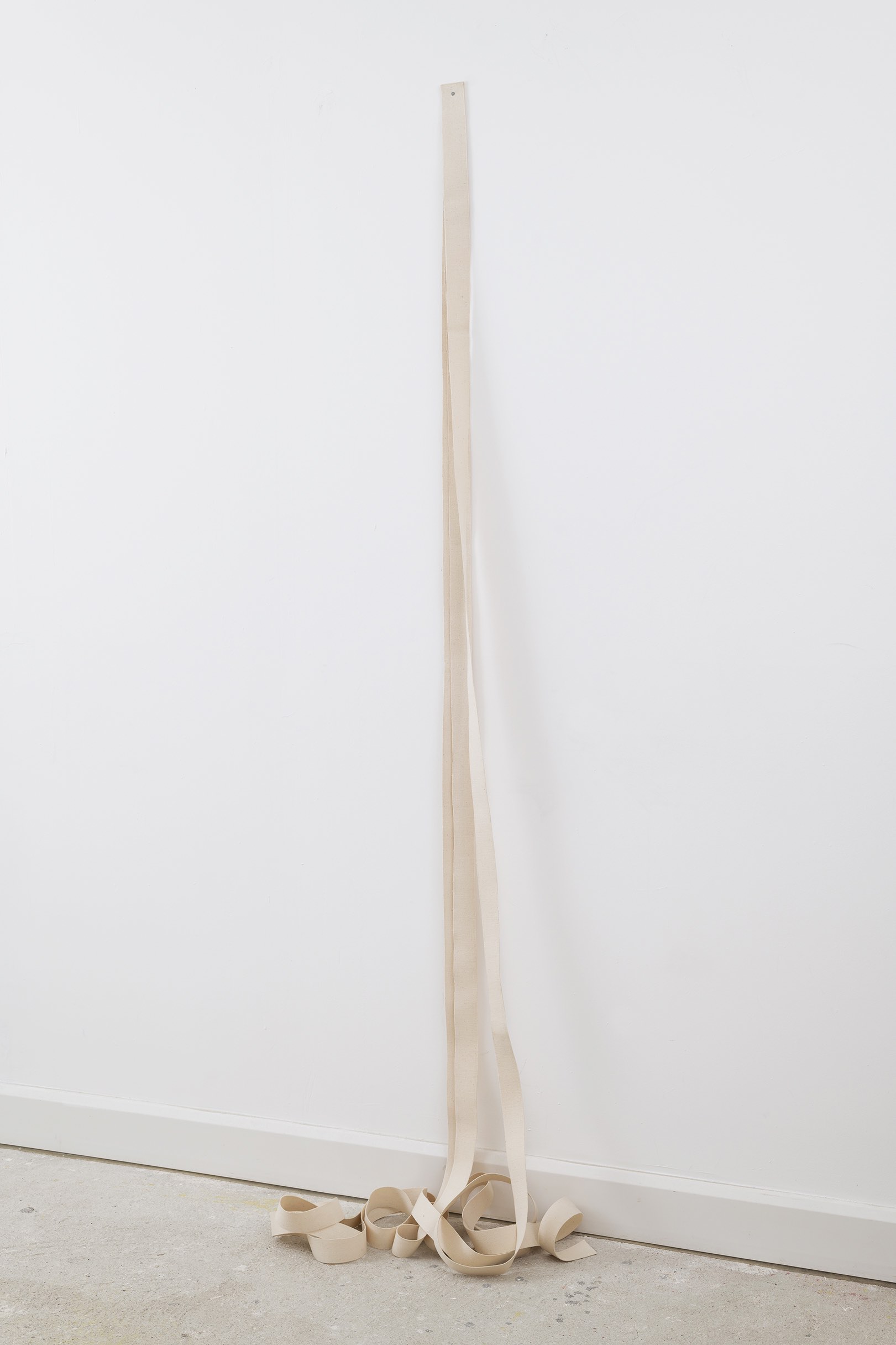
From the late 1950s onwards, he developed a radical understanding of form, shifting away from the autonomous object toward a conception of sculpture as activated through use. This approach finds its most decisive expression in his textile works grouped under the title 1. Werksatz (1963–1969), in which form remains latent until enacted.
Central to his practice is the principle of Aktivierung: the idea that the work only fully exists through the gestures of those who engage with it. Composed of fabric elements, bands, and modular structures, these works function as precise protocols (holding, stretching, wearing) through which form unfolds in time. Sculpture becomes contingent and relational, situated between instruction and realization.
While associated with conceptual and performative practices, Walther’s work maintains a strong affinity with the legacies of the Bauhaus and geometrical abstraction. Its emphasis on seriality, elementary structures, and measure aligns it with minimal and post-minimal art, while its insistence on bodily activation introduces a fundamentally experiential dimension.
His work has been presented internationally, including in Spaces at the Museum of Modern Art (1969) and several editions of documenta in Kassel. In 2017, he was awarded the Golden Lion for Best Artist at the Venice Biennale.
Walther’s work is held in major institutional collections, including the Centre Pompidou, the Museum of Modern Art, and the Dia Art Foundation.